
INSTALLATIONS
Fire Pit Design Considerations for Northern Climates
Minnesota winters change how a fire feature should be sited, sized, and built. The details that matter most.
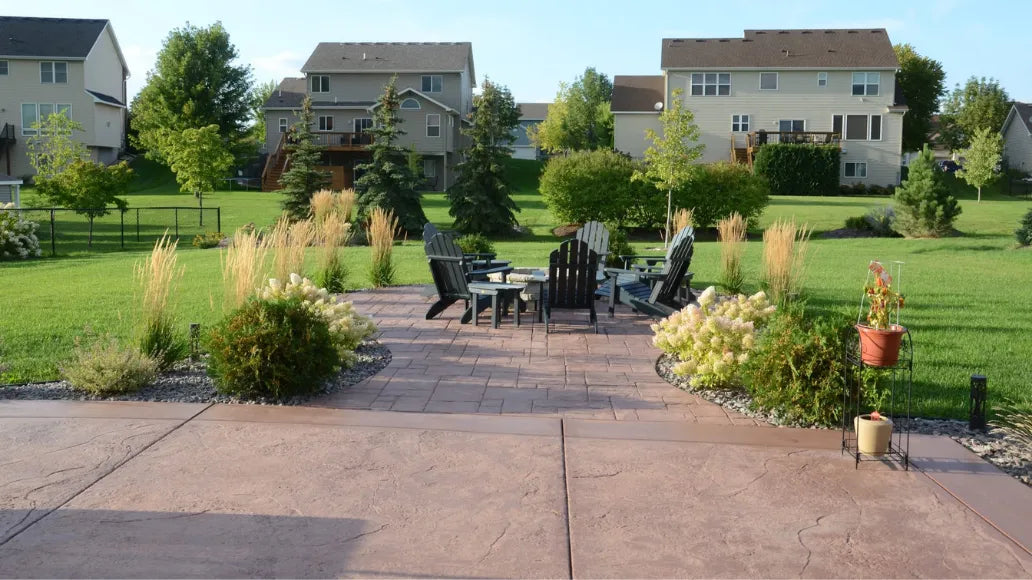
A fire pit is the feature that turns a patio into somewhere people actually sit. It is also the feature most likely to be built wrong in Minnesota, because the things that make a fire pit work in Tennessee are not the things that make one work through a Lake Minnetonka winter.
Frost moves everything. Wet stone cracks. Wind decides whether anyone stays out past nine. And a fire feature that was sited for a photo instead of for the way the yard actually gets used tends to sit cold for years.
Here is what we think through before a single stone goes down, and what a homeowner should be asking about before signing a proposal.
Wood or Gas: the Decision That Shapes Everything Else
Almost every other choice follows from this one, so it comes first.
Wood burning is the one people picture. Real flame, real smell, real heat, and no monthly cost once it is built. It also means storing and hauling wood, dealing with smoke that follows whoever moved last, cleaning ash, and accepting that some evenings the wind makes it unusable. Wood pits generally need more clearance from the house and more room around them.
Gas gives you flame in ten seconds and off in one. No smoke, no ash, no wood pile, and far more forgiving clearances, which matters on smaller lots where a wood pit would not legally fit. The tradeoffs are real: less radiant heat than a wood fire, a gas line that has to be run and connected by a licensed contractor, and a higher up front cost.
The practical question we ask homeowners is how they picture using it. If the answer is a few big evenings a summer with friends and a woodpile they will enjoy tending, wood is right. If the answer is twenty minutes after dinner on a Tuesday in October, gas is the one that actually gets used. The most common regret we hear is a beautiful wood pit that never gets lit because starting a fire is a project.

Where It Goes Matters More Than What It Looks Like
Siting is where most fire features are won or lost, and it happens before anything is built.
- Distance from the house and anything that burns. Wood burning features need real separation from structures, overhangs, fences, and low branches. Requirements vary by city across the west metro, and we confirm what applies to your property before we design around it.
- Wind. Most Minnesota properties have a prevailing direction, and an evening breeze off the lake behaves differently than wind on an open lot. Placed poorly, every seat is downwind of the smoke at some point in the evening. Placed well, the house, a wall, or a planting mass does the blocking for you.
- Where the gas line has to come from. A gas pit twelve feet from the house is a very different trench than one at the back of the lot. Worth knowing before you fall in love with a location.
- What is overhead and underfoot. Tree canopy, power service, irrigation, and any existing utility all constrain the spot. Locates happen before excavation.
- How the water moves. A fire pit in a low collection area sits in a puddle every spring. This is the same grading question that governs everything else on the property, which is why we look at it first. Our Drainage 101 post covers the reasoning in full.
Frost Is Why Fire Pits Fail Here
A fire feature is a heavy, rigid mass of stone sitting on Minnesota ground. Every winter the soil beneath it freezes, expands, and lifts. Every spring it thaws and settles. If the pit is sitting on soil, or on a base that holds water, it will not settle back the way it came up. Joints open, the surround goes out of level, and the surrounding patio pulls away from it.
The fix is the same one that governs every hardscape we build: a deep, compacted, open graded aggregate base that lets water pass through instead of trapping it, built to the same standard as the patio it sits in so the two move together rather than fighting each other. This is invisible work that adds cost to a proposal and is the single biggest difference between a fire pit that looks new in year fifteen and one that looks tired in year four. You can see how we approach base work across our hardscaping and stonework services.
There is a second freeze problem specific to fire: any water trapped inside stone will turn to steam when the fire is lit. That is why material selection is not just an appearance decision.
Materials That Survive Both Heat and Winter
- A proper fire brick liner. The inside face of a wood burning pit takes direct, repeated, extreme heat. Fire brick or a steel insert takes that abuse so the decorative stone on the outside never has to. Skipping the liner is one of the most common shortcuts, and it shows up as cracked and spalling face stone within a few seasons.
- Dense stone on the face, not porous stone. Porous and saturated stone absorbs water, and water plus heat means cracking and popping. This is also the reason river rock does not belong inside the burn area. Smooth round rock holds moisture in its core and can crack sharply when heated.
- Lava rock or fire glass for gas features. These are manufactured to be heated and are the correct fill for a burner, both for safety and for how the flame reads.
- A cap that works as a seat and a table. A wide, comfortable cap course is the detail people notice every single time they use it. It holds a drink, it gives you somewhere to sit when the chairs are full, and it is where quality of workmanship is most visible.
Size, Seating, and the Circle Nobody Measures
The most common sizing mistake is a fire pit that is correct on paper and wrong in the yard. A pit that is too large pushes seating so far out that people cannot hear each other. A pit that is too small on a large patio looks lost.
What actually matters is the seating circle, not the pit. People need to be close enough to feel heat and hold a conversation, far enough back to be comfortable when the fire is going well, and there has to be room to walk behind the chairs without squeezing past. That means the patio around the feature needs to be designed at the same time as the feature itself, not after. A fire pit dropped into an existing patio that was never sized for it is the version we get called to fix.
Getting More Season Out of It
This is the part that separates a fire feature that gets used from one that gets admired. In our climate the shoulder seasons are the payoff: September through November, and again in early spring. A few decisions extend that window considerably.
Blocking the prevailing wind with a seat wall, a boulder grouping, or an evergreen planting mass makes a bigger difference to comfort than raw fire size. Orienting the seating area toward late afternoon sun keeps the space warm before the fire is even lit. Choosing a surface and a layout that shed water and dry quickly means the space is usable the day after rain rather than three days later. And a gas feature, for all the purists dislike about it, is the one people light on a cold Tuesday when nobody feels like building a fire.
Permits, Codes, and Burning Rules
Requirements are not uniform across the west metro. Cities differ on setbacks from structures and property lines, on whether a permit is needed, and on rules for open burning, and a gas line always involves a licensed contractor and its own inspection. Some associations have their own restrictions on top of the city's.
We sort this out during design rather than during construction. Nobody should find out about a setback after the base is in.
Frequently Asked Questions
Is a gas fire pit worth the extra cost over wood?
It depends entirely on how you will use it. Gas costs more to build because of the line and the connection, and it produces less heat than an open wood fire. It also gets used far more often, because there is no wood to buy, split, store, or light. If you want a fire feature for short spontaneous evenings, gas earns the difference back in use. If you want a few memorable bonfire nights a year, wood is the better spend.
How close can a fire pit be to my house?
That is set by your city and by the type of feature, and wood burning requires considerably more clearance than gas. Rather than quoting a number that may not apply to your address, we confirm the requirements for your property as part of the design.
Can I use river rock in or around my fire pit?
Around it, yes. Inside the burn area, no. Round river rock holds moisture in its core, and when that moisture heats up it can crack the stone sharply. Use fire brick, lava rock, or fire glass inside the feature depending on the design.
Why did my old fire pit crack or go out of level?
Almost always one of two things. Either there was no fire brick liner, so the decorative stone took direct heat it was not made for, or the base underneath was not built for frost, so the whole feature has been lifting and settling every year. Both are base and build issues, not material quality issues.
When can a fire pit be built?
We build from spring through late fall while the ground is workable. Late summer and early fall are a good window, because the feature is finished in time for the exact stretch of the year it is best used.
Build It Once, Use It for Twenty Years
A fire feature is a small part of most landscape budgets and one of the most used. The difference between one that still sits level and clean in year twenty and one that looks tired in year four comes down to base, liner, material, and placement. None of those are visible in a photograph. All of them are decided before construction starts.
Aspen Landscape has been designing and building outdoor living spaces across Wayzata, Orono, Excelsior, and the Lake Minnetonka area since 1980. Request a free design consultation and we will walk the property with you, talk through how you actually want to use the space, and design the fire feature around that.
Details Matter.
Keep Reading
Related Articles
 COMING SOON
INSTALLATIONS
How to Choose the Right Retaining Wall Material
Block, natural stone, or boulder - each performs differently. Here's how to match material to site.
 COMING SOON
SEASONAL CARE
Spring Cleanup Timing in Minnesota
The right window for spring work is narrower than most homeowners realize - and missing it has lasting effects.
Planning a Landscape Project?
Schedule a free consultation and we’ll help you avoid every mistake on thislist.